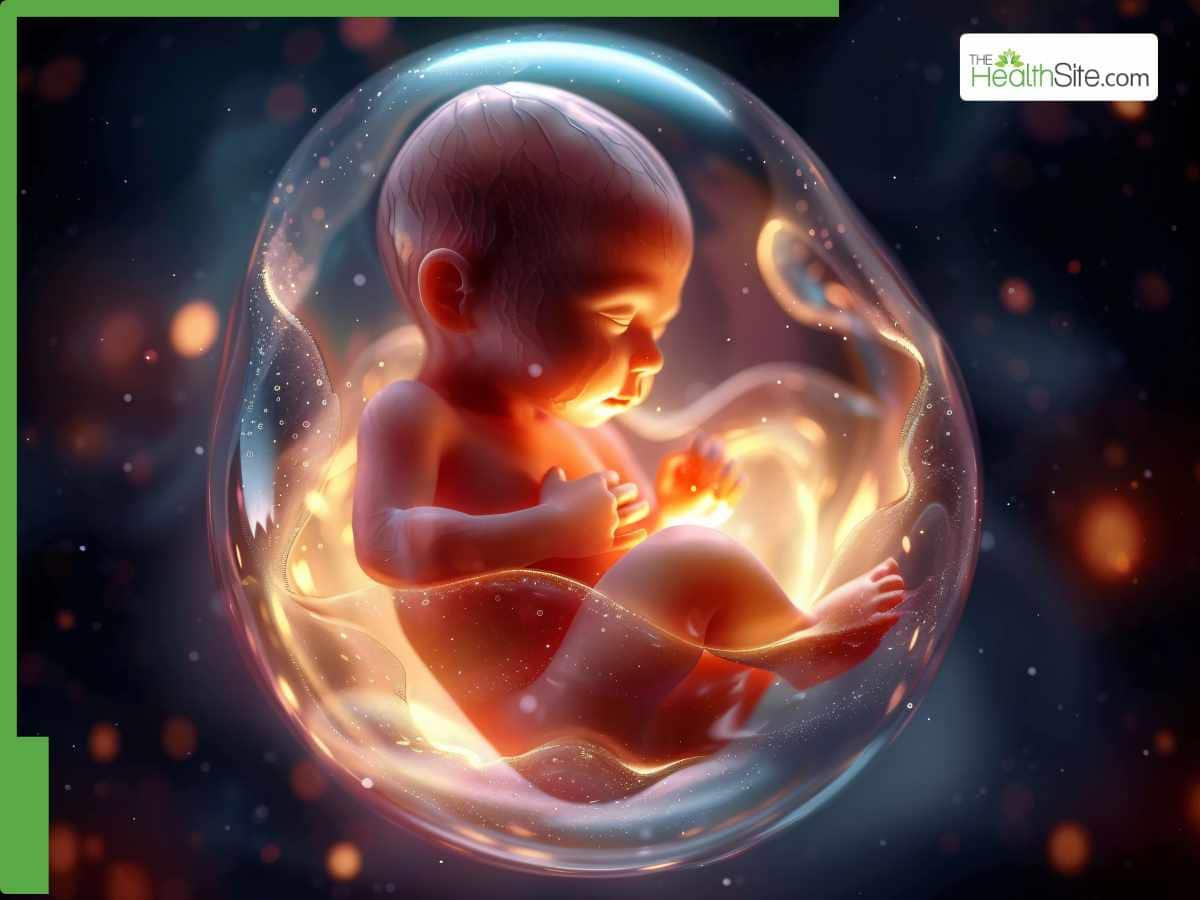
According to a doctor, when a mother becomes aware of her emotional landscape, she becomes an empowered transmitter of safety, love, and trust, which can lay the groundwork for a child’s emotional strength.
 VERIFIED By: Dr Monicka Singh Shubha, an awakening facilitator and medical doctor

Written by Prerna Mittra |Published : March 28, 2025 8:41 PM IST
Pregnancy is a fascinating concept. Biologically, there are many incredible things happening inside the body, and psychologically, too, there are interesting developments taking place. For instance, the baby — while growing in the womb — starts to bond with the mother. They exist at the same time, breathing and eating together, feeling each other’s movements. Is it possible then for an unborn child to be aware of the mother’s feelings? More importantly, can a mother’s emotions shape a baby’s subconscious?
Dr Monicka Singh Shubha, an awakening facilitator and medical doctor is of the opinion that a child’s emotional and subconscious blueprint begins to form long before their first cry, even before conception. “As a practising obstetrics and gynaecologist, my experiences with hundreds of expecting mothers have made me understand that the nine months of pregnancy are far more than a physical process: they are a sacred time of subconscious imprinting, emotional programming, and energetic transfer,” she said.
The Science Of Imprinting Before Birth
The doctor stated that from what she has seen in her practice, 40 per cent of a child’s subconscious patterns are formed before birth; 10 per cent is imprinted even before conception, shaped by the mental and emotional state of both the parents, and 30 per cent is formed in the womb, as the baby absorbs the mother’s emotions, beliefs, and environment.
“Think of pregnancy as a kind of emotional coding. The womb becomes the first classroom, where the child learns — without words — how safe the world is, how love feels, and how fear sounds,” the doctor explained.
Emotions Are Biochemical
Dr Monicka stated that — as proven by one Dr Candace Pert, a renowned neuroscientist — emotions are actual biochemical signals that interact with every cell in the body. It, therefore, means that whatever the mother feels (love, anger, stress, calm) is relayed to the unborn baby at a cellular level.
“Each emotion triggers a biochemical reaction, which is carried via the bloodstream to the baby through the placenta. For instance, if the mother is frequently stressed, angry, or anxious, her body releases higher levels of cortisol, the stress hormone. This does not only affect her, it also crosses the placental barrier to impact the baby’s physiology,” the expert said.
Impact Of High Cortisol During Pregnancy
The doctor warned that when the cortisol level is high during pregnancy, blood flow to the uterus can decrease, because the body goes into fight-or-flight mode, redirecting blood to central organs and away from the womb. As such, the baby may experience intrauterine growth retardation (IUGR) and peripheral organs like limbs may receive less nourishment for development. It is also possible that the baby is born underweight or emotionally hypersensitive.
Emotional Frequencies
According to Dr Monicka, while the baby in the womb does not understand language, it feels everything, such as the rhythm of the mother’s heart, the tension in her breath, the quality of her thoughts. If the mother is afraid, the baby feels fear. If the mother is joyful, the baby vibrates in joy.

“This deep emotional resonance continues post-birth. Children up to the age of seven or eight years largely operate from their subconscious mind; the imprints formed in the womb continue to shape how they connect, respond, and cope with the world. Even complex emotional patterns — such as maternal suspicion, insecurity, or unresolved trauma — can influence a child’s emotional wiring and may show up as sensitivity, detachment, or even psychiatric tendencies over time,” the expert stated.
Does Science Support This Claim?
The CDC-Kaiser Permanente Adverse Childhood Experiences (ACE) study corroborates this claim, the expert said, adding that per this study, unresolved early emotional trauma can disrupt brain development, impair emotional regulation, lead to risky behaviours, and increase the risk of chronic disease and early death later in life.
Conscious Pregnancy
The expert said that ‘awakening in the womb’ is a process that is not about ‘perfection’, but about ‘awareness’. “It encourages mothers to observe their thoughts and emotions, transform reactive patterns, learn tools for emotional regulation and practise intention-setting and conscious connection with their unborn child.”
The doctor also recommended couples to create an environment of harmony, with their families preparing the right way to receive the baby.

Don’t Miss Out on the Latest Updates.
Subscribe to Our Newsletter Today!

link