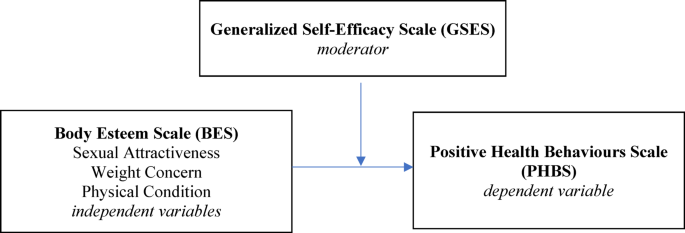
This study examined the relationship between self-efficacy, body image, and positive health behaviours among pregnant women, with a particular focus on the role of self-efficacy as a moderator in the link between body image and these behaviours.
Self-efficacy is an important determinant in shaping positive health behaviours and attitudes. Participants in this study displayed a moderate level of self-efficacy, approaching the threshold between average and high reference values. A high level of self-efficacy has been shown to support psychosocial adaptation during pregnancy34. Women with high self-efficacy tend to critically evaluate their health and make informed decisions regarding diet, physical activity, and weight management. They are more likely to engage in positive health behaviours, such as regular physical exercise, maintaining a balanced diet, and adhering to medical recommendations27,35,36. The findings confirmed a positive correlation between self-efficacy and positive health behaviours, further supporting its well- established role in prenatal health. However, its moderating role in the association between body image and health behaviours has received limited attention in prior research on pregnant populations, and this study contributes to filling that gap.
The level of self-efficacy during the perinatal period is particularly significant in pregnancies accompanied by complications37. A strong belief in one’s ability to overcome challenges acts as a critical adaptive and motivational factor, while low mood and mental health issues predict reduced self-efficacy38,39.
The findings revealed positive correlations between self-efficacy and body image across all domains analysed. This is particularly relevant for women with negative body image during pregnancy, as high self-efficacy may protect against body dissatisfaction associated with typical pregnancy-related weight gain, thereby reducing the risk of disordered eating and psychological distress8,40. Consequently, prenatal education programs should include support aimed at helping women adapt to physiological changes and embrace a positive perception of their bodies. Encouraging activities that build self-efficacy among pregnant women can improve their body image, empower them to make healthier decisions, and ultimately enhance their overall health and quality of life.
Pregnancy significantly influences how women perceive their bodies and attractiveness, with potential impacts on both well-being and mental health. Assessing body image is a vital aspect of prenatal care, offering opportunities to educate women on managing the physiological changes that occur during this period5.
The analysis of the relationship between self-efficacy and sexual attractiveness revealed that self-efficacy moderates how women perceive changes in this domain during pregnancy. A positive association between the perception of sexual attractiveness and positive health behaviours was observed across all levels of self-efficacy. This finding suggests that a positive body image in this area supports positive health behaviours, regardless of self-efficacy levels.
The physiological, anatomical, and hormonal changes associated with pregnancy can also influence sexual activity. A decrease in sexual intercourse, especially in the first trimester, is often due to physical discomfort and psychological adjustments. An increase in desire during the second trimester is associated with reduced discomfort and greater emotional stability. In contrast, the third trimester is often characterized by a decline in desire due to concerns about fetal health and the physical challenges of intercourse41,42. Other reported changes in sexual function include reduced orgasm intensity, diminished sexual desire and satisfaction, and a higher incidence of dyspareunia43. The findings of Van den Brink et al. highlight that cultivating a positive body image can significantly enhance sexual satisfaction and overall relationship quality. Initiatives focused on fostering and maintaining a positive body image may therefore contribute to more fulfilling sexual relationships for couples44. Our results indicate that a positive perception of one’s sexual attractiveness during pregnancy promotes healthier lifestyle choices. While self-efficacy strengthens this positive effect, it is not a prerequisite for the observed relationship between sexual attractiveness and positive health behaviours.
Maintaining an optimal body weight is essential for women planning pregnancy. According to the World Health Organization (WHO) recommendations on Body Mass Index (BMI), women should aim for a healthy pre-pregnancy weight45. Similarly, appropriate weight gain during pregnancy should align with guidelines from the Institute of Medicine (IOM)46. Pre-pregnancy weight and gestational weight gain are modifiable risk factors for adverse pregnancy outcomes. Therefore, women planning pregnancy should focus on achieving a healthy weight, while pregnant women should aim for appropriate weight gain47,48. Studies suggest that the connection between concerns about weight and positive health behaviours in pregnant women depends significantly on their level of self-efficacy. For women with low self-efficacy, concerns about gestational weight gain do not translate into meaningful actions to control their weight. This may stem from a perceived inability to make and sustain lifestyle changes49. Conversely, women with moderate to high self-efficacy are more likely to believe in their capacity to implement changes and engage in positive health behaviours in response to weight concerns. Hill et al. reported that women with excessive gestational weight gain had poorer body image compared to those who perceived their weight gain as appropriate. Similarly, women who attempted to lose weight before pregnancy or experienced weight-related stigma during pregnancy also reported worse outcomes50. These findings highlight that weight-related body esteem during pregnancy can positively influence health behaviours, but mainly when self-efficacy is at least moderate. This underscored the interplay between body image and psychological resources in shaping maternal health decisions. Self-efficacy is a crucial determinant. Women with low self-efficacy will need targeted support to build confidence in their ability to make lifestyle changes before weight concerns can effectively drive positive actions.
This study revealed that the relationship between physical condition and positive health behaviours is influenced by the level of self-efficacy. In the Body Esteem Scale, the Physical Condition subscale reflects participants’ subjective evaluations of their physical fitness, stamina, energy levels, and muscular strength. Among women with moderate or high self-efficacy, a more positive perception of physical condition was associated with positive health behaviours. However, this connection was absent in women with low self-efficacy, suggesting that a lack of confidence in their ability to effect change diminishes the influence of good physical fitness on other healthy behaviours.
Exercise offers further benefits by reducing the risk of cardiovascular complications and enhancing overall physical performance. It strengthens muscles, reduces the likelihood of back pain, and supports proper posture. Stretching exercises increase muscle and joint flexibility, preparing the body for childbirth. Regular pelvic floor muscle exercises improve their strength and elasticity, potentially facilitating labor and reducing the risk of urinary incontinence16,19,51. Breathing and aerobic exercises further enhance lung capacity and breathing efficiency, which are particularly important in the later stages of pregnancy and during labor17,19. Despite these well-documented benefits, research indicates that physical activity levels often decline during pregnancy, particularly among overweight or obese women52. It is also important to consider that pregnant women frequently experience fatigue, nausea, and mood changes, which can reduce their physical activity and sense of agency. Additional factors such as concerns about the baby’s health, difficulty adapting to pregnancy, and a lack of support from their surroundings may further contribute to decreased activity levels27,28.
The findings of this study suggest that interventions aimed at enhancing both self-efficacy and body image in pregnant women could be particularly effective in fostering positive health behaviours. Strengthening self-efficacy is crucial for adopting and sustaining behaviours that influence maternal health, pregnancy outcomes, and fetal development. These positive health behaviours include maintaining a balanced diet, engaging in regular physical activity, ensuring adequate sleep and rest, avoiding harmful substances, supporting mental health, and attending routine prenatal check-ups13,53.
Pregnant women’s health behaviours are influenced by various factors beyond body image and self-efficacy. Social and cultural norms, relationships with family members and partners, psychological factors such as emotional well-being, past pregnancy experiences, and situational factors like access to prenatal care all play significant roles in shaping health behaviours during pregnancy14,24,53,54.
The study revealed that self-efficacy acts as a moderator in the relationship between body image and health behaviours among pregnant women, underscoring its role in influencing these behaviours and mediating the impact of body image on them. The strength of this relationship varies depending on specific aspects of body perception, particularly concerns about weight and physical condition. The positive effects of self-efficacy on health behaviours emerge only at moderate or high levels of self-efficacy. A positive body image alone does not guarantee healthy behaviours if a woman lacks confidence in her ability to manage these aspects of her life, highlighting the importance of specific “thresholds” of self-efficacy. In the context of sexual attractiveness, the positive association with positive health behaviours is consistent across all levels of self-efficacy. This connection may serve a protective function, mitigating the negative consequences of a poor body image, such as unhealthy dietary habits and emotional distress.
Practical implications
The study underscores the importance of educational and support programs in prenatal care that strengthen self-efficacy and foster a positive body image, alongside knowledge of healthy behaviours. Such programs could include guidance on recommended weight gain, relaxation techniques, and physical exercises specifically designed for pregnant women.
Considering the adverse physical and psychological effects of body dissatisfaction during pregnancy, implementing strategies to reduce the stigma associated with excessive weight gain is crucial4. Health institutions should promote healthy lifestyle habits through media campaigns advocating positive body image. Furthermore, incorporating cognitive-behavioural therapy into prenatal care, alongside the development of digital applications and online platforms providing personalized support, may empower women by strengthening their confidence and motivation. The implementation of these practical strategies could enhance the quality of prenatal care, promote maternal well-being, and lead to improved health outcomes for both mothers and their children.
Strengths and limitations of the work
This study is among the first to comprehensively examine self-efficacy as a moderating factor in the relationship between body image dimensions and positive health behaviours in pregnant women. Advanced statistical analyses identified significant interactions and threshold values for self-efficacy, highlighting potential areas for targeted interventions. By exploring various aspects of body image, this study provides a nuanced understanding of its impact on health behaviours, avoiding oversimplification. The findings add a new perspective on self-efficacy’s role, guiding future research and informing potential interventions. This holistic approach integrates psychological and health-related factors, enhancing our understanding of the determinants of health in pregnant women. However, the study’s correlational design limits causal inference. Future research should investigate the long-term effects of interventions to boost self-efficacy and positive body image.
link