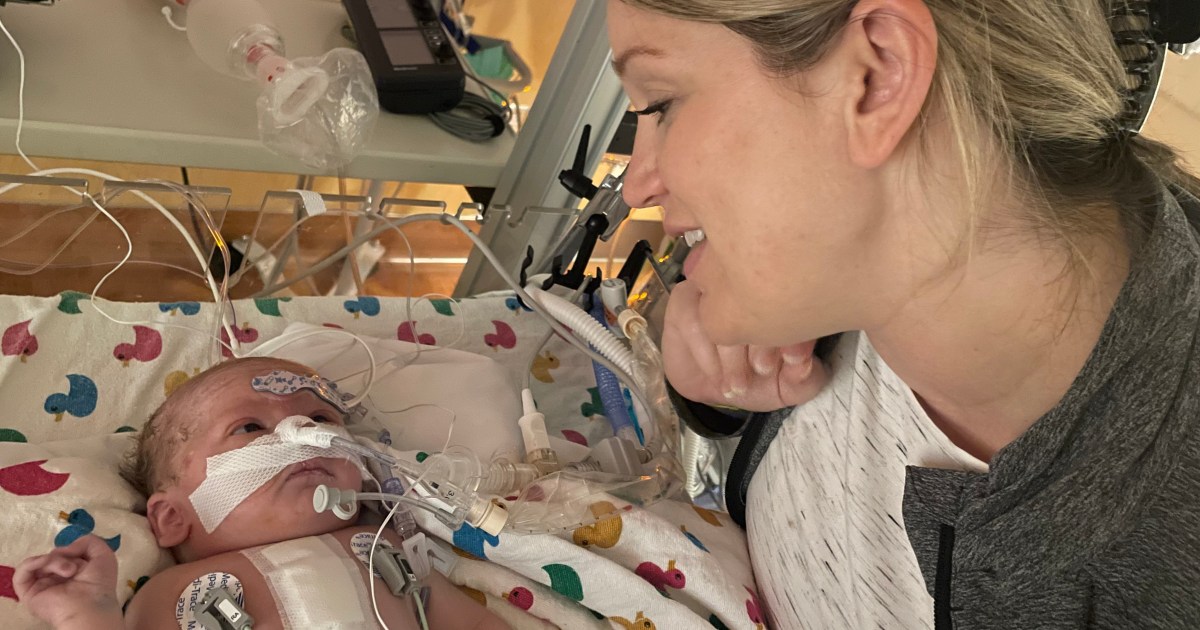
Today, Brooks Klingsporn is a happy 1-and-a-half-year-old baby. However, he’s already had more heart surgeries than most people get in a lifetime — including one before he was even born.
Last year, Brooks became one of about two dozen patients to receive a new in-utero cardiac procedure.
Lauren Klingsporn, 36, found out she was pregnant with Brooks two years ago on Halloween, she tells TODAY.com. She and her husband Alex Klingsporn, 38, were living in Dallas, Texas, with their two children, now 7 and 4.
Given her first two pregnancies were complication-free and her children were healthy, she expected her third birth to be uneventful.
The couple did genetic testing for all of their pregnancies. “We did the testing for Brooks at 12 weeks, (and) nothing came back,” Lauren Klingsporn says.
However, at her 20-week anatomy scan, everything changed. “My obstetrician said that the left side of his heart didn’t look like it was working quite as well as it should,” she recalls.
The couple was referred to a maternal-fetal medicine specialist, who told them that Brooks’ left ventricle — one of the two lower heart chambers — didn’t squeeze properly. Finally, they saw a fetal cardiologist who did an echocardiogram to confirm Brooks’ diagnosis: hypoplastic left heart syndrome.
“There were lots of tissues,” Alex Klingsporn tells TODAY.com.

Hypoplastic Left Heart Syndrome
Hypoplastic left heart syndrome (HLHS) is a rare congenital defect that occurs when the left side of the heart does not develop properly.
“It’s one of the most severe congenital heart diseases. We don’t know what causes it, but it is fairly rare,” Dr. Shaine Morris, medical director of fetal cardiology at Texas Children’s Hospital, tells TODAY.com. HLHS affects about 1 in 5,000 newborns in the United States, Morris adds.
The heart has four chambers, explains Morris: two upper (atria) and two lower (ventricles). Oxygen-poor blood flows through the right side of the heart and gets pumped into the lungs. The left atrium then receives oxygenated blood from the lungs, and the left ventricle pumps it to the body, per the Cleveland Clinic.
In babies with HLHS, the left ventricle and valves are too small and poorly formed, says Morris. As a result, the heart can’t properly circulate oxygen-rich blood. If left untreated, HLHS is fatal within the first year of life.
Brooks also had a complication called a restricted atrial septum, which made him a “high-risk” HLHS patient.
“If the left side of the heart doesn’t work … the blood has to get out another way, so it requires a hole between the left and right atrium, which is common in fetuses,” says Morris. However, Brooks’ hole was blocked, so the blood couldn’t flow where it needed to and backed up in his lungs.
“It makes the surgeries after the birth not possible or a much bigger challenge,” Alex Klingsporn explained.
For standard-risk HLHS patients, the typical treatment is a series of three open-heart surgeries after birth, Morris adds.
But due to his complication, Brooks was already declining rapidly in the womb. “His heart and lungs were getting damaged in-utero,” says Morris.
Doctors expected that Brooks would be too sick by the time he was born for treatment. The Klingsporns were given two options: Wait and hope Brooks could get surgery after birth, or opt for comfort care.

The Klingsporns sought a second opinion, and learned about a third possibility: in-utero heart surgery done before birth to reduce prenatal damage so that Brooks could be stable enough to get the open-heart surgeries after birth.
Eventually, they were referred to Texas Children’s in Houston, where a team of specialists have been performing fetal cardiac intervention surgeries since 2012.
In-Utero Heart Surgery While Pregnant
“It’s very novel, the fetal intervention. We’re basically relieving the pressure in-utero and allowing the heart and lungs to recover,” says Morris. The procedure would involve placing a tiny stent in Brooks’ heart to open up his atrial septum.
The surgery is associated with improved survival for babies with HLHS and a restricted atrial septum, says Morris.
In a new study published in the journal “Circulation: Cardiovascular Interventions,” which looked at babies with Brooks’ condition and complication, researchers found this fetal intervention technique increased the chance of survival to 72% compared to 21% for those who didn’t get the procedure, says Morris, one of the co-authors.
Fewer than 30 patients have gotten this surgery, and only select fetuses are eligible. “We’re so thankful that they considered us, and after all the tests and imaging, they told us Brooks was a candidate,” Lauren Klingsporn says.
“I was awake the whole time.”
“When they explained what they would do, it was mind-blowing,” says Lauren Klingsporn.
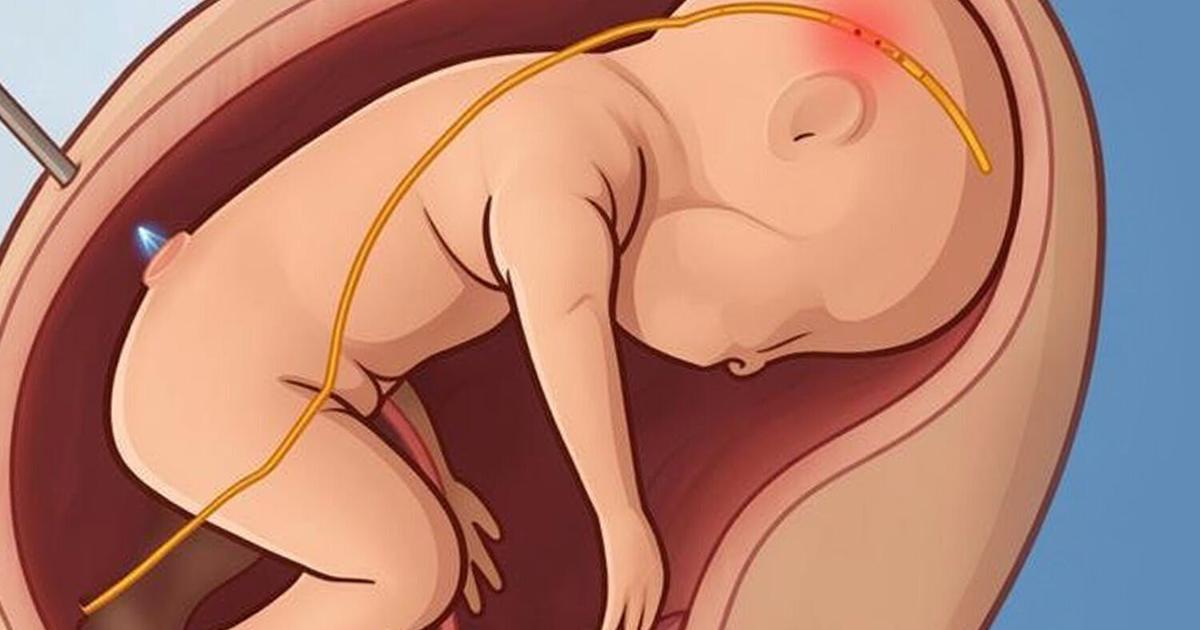
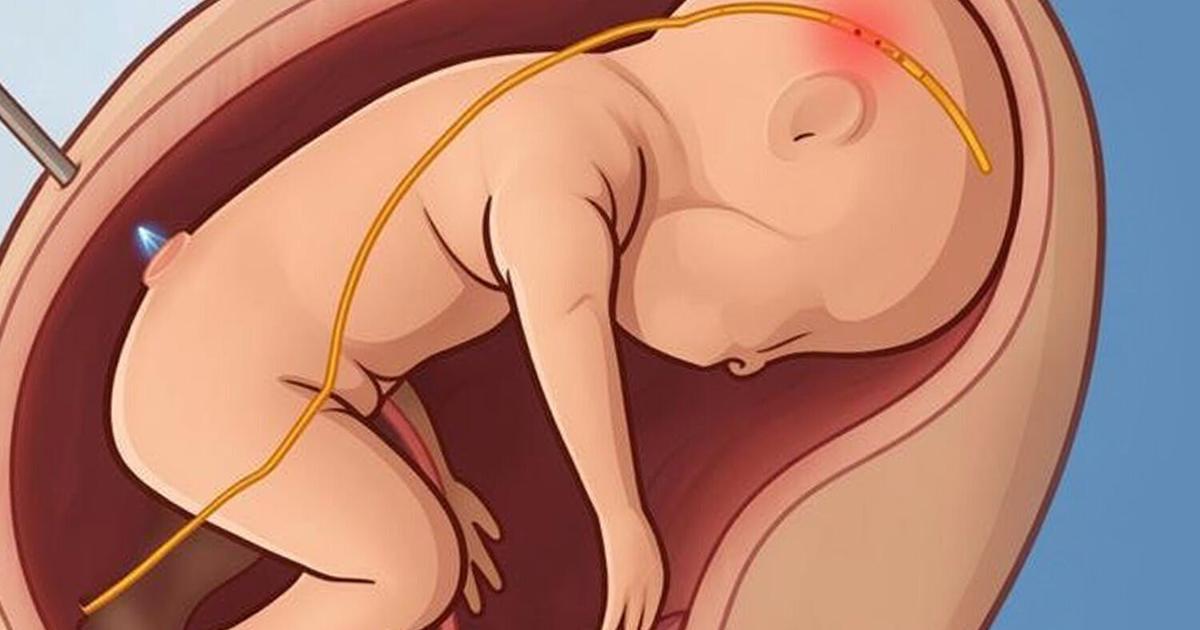
Surgeons took a large amniocentesis needle, guided by an ultrasound, and poked it through the abdomen and uterus, into Brooks’ heart. A laser is then used to burn a tiny hole across the atrial septum, and a wire is threaded through the needle.
“Over the wire, we pass a balloon and a stent that’s flattened. … Then we inflate the balloon within the stent, so the stent is a hollow cylinder,” explains Morris.
Lauren Klingsporn had the surgery at about 30 weeks pregnant. It lasted five hours, and she was awake the whole time. “I had an epidural, so I couldn’t feel anything,” she recalls.
“It’s better if the mom’s cardiovascular system is alert,” says Morris, who performed the surgery with a team at Texas Children’s.
It was a success. “His heart was so small. … The precision these doctors have is incredible,” says Alex Klingsporn.
At a follow-up four weeks later, Brooks’ lungs had improved. “The intervention worked, and we were hopeful that we could make it all the way to 40 weeks to deliver,” says Lauren Klingsporn.

Emergency C-Section and Delivery
At Brooks’ final fetal echocardiogram at 36 weeks, the doctors saw what looked like a clot in his heart. They decided to induce the next day.
The couple was told that if Brooks did have clots, he may no longer be eligible to get the surgeries he needed after birth. “We had prepare ourselves to switch gears again and do comfort care,” says Lauren Klingsporn.
After a long induction, Brooks’ heart rate dropped and his mother had a placental abruption, when the placenta separate from the uterine wall before birth. “It turned into an emergency C-section, which was very dramatic,” she says.
Brooks was born on May 12, 2024, which was Mother’s Day.
Lauren Klingsporn had lost two liters of blood and needed a transfusion, and Brooks was rushed to the intensive care unit.
“I sprinted over to the next tower at Texas Children’s. … I probably looked crazy … and when they got me back there, I kept asking, ‘Do you see clots?'” recalls Alex Klingsporn.
There were no clots. “They said everything looks great. … I remember falling to my knees, crying, I was so happy,” he says, through tears.
After more tests and scans, Brooks was cleared for the first of three heart surgeries. A long 12 hours after the delivery, his mother was finally able to see and hold him.

Open-Heart Surgeries and Prognosis
At 4 days old, Brooks underwent his first open-heart surgery, during which surgeons opened up his aorta to allow the right ventricle to pump blood to the body.
It was a success, but Brooks remained in the ICU to recover until his next open-heart surgery at 4 months old. The recovery from the second procedure was difficult, Lauren Klingsporn says.
Brooks needed heart catheterizations, which revealed he had extra blood vessels that could affect his blood-oxygen levels and heart function later on.
Eventually, Brooks was released from the ICU after 179 days — from there, it was learning the basics. “The things you should have been working on as a newborn, he’s now trying to learn six months later, but he caught on,” says Lauren Klingsporn.
Brooks passed each milestone, from eating on his own to sitting up. “They’re definitely big moments in your child’s life,” says Alex Klingsporn.
Today, Brooks’ condition is stable, despite the extra blood vessels in his heart. “He’s doing good. We just started him in day care, so we get to do some normal baby things,” says Lauren Klingsporn.

They anticipate Brooks will be able to get this third surgery around age 4. The family has relocated from Dallas to Houston to be closer to his care team.
“The doctors have given us hope that Brooks is going to make it through to this next stage and get to grow up with his brother and sister, and for that, we’re very thankful,” says Lauren Klingsporn.
“I will never forget … not only the doctors, but the nurses, the therapists and all the people that are with you every day, keeping your spirits up,” says Alex Klingsporn.
link